
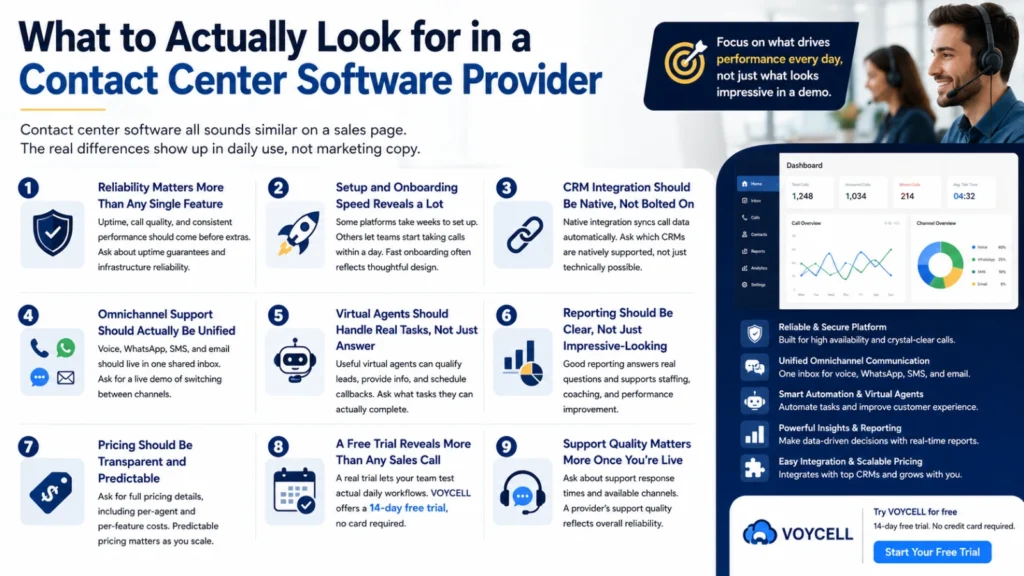
Contact center software all sounds similar on a sales page. Features, dashboards, and buzzwords blur together after the third demo. The real differences show up in daily use, not marketing copy. Here’s what actually matters when choosing a provider.
Reliability Matters More Than Any Single Feature
A feature-rich system is useless if calls keep dropping constantly. Uptime, call quality, and consistent performance should come before extras. Ask providers directly about uptime guarantees and real infrastructure reliability. A provider without a clear answer here deserves real hesitation.
Setup and Onboarding Speed Reveals a Lot
Some platforms take weeks of configuration before agents can even work. Others let teams start taking calls within a single day. Long setup times usually signal deeper complexity buried under the interface. Fast, guided onboarding often reflects genuinely thoughtful product design.
CRM Integration Should Be Native, Not Bolted On
Many providers claim integration but actually require clunky third-party workarounds. Native CRM integration means call data syncs automatically, without manual effort. Ask specifically which CRMs are natively supported, not just technically possible. This difference affects daily agent workflow significantly.
Omnichannel Support Should Actually Be Unified
Voice, WhatsApp, SMS, and email shouldn’t live in separate, disconnected tools. Real omnichannel support brings every channel into one shared inbox. Ask for a live demo of switching between channels mid-conversation. If it feels clunky in a demo, it will feel worse daily.
Virtual Agents Should Handle Real Tasks, Not Just Answer
Many providers market virtual agents that only forward calls elsewhere. Genuinely useful virtual agents can qualify leads and schedule callbacks directly. Ask what specific tasks their virtual agents can actually complete independently. Vague answers here usually mean limited real functionality.
Reporting Should Be Clear, Not Just Impressive-Looking
Dashboards full of charts don’t automatically mean useful reporting. Ask whether reports actually answer questions like conversion and response time. Good reporting should directly support staffing and coaching decisions. If reports don’t drive decisions, they’re just decoration.
Pricing Should Be Transparent and Predictable
Some providers advertise low base prices, then add fees for basics. Ask for full pricing details, including per-agent and per-feature costs. Predictable pricing matters more as a business scales its team. Surprises in billing usually indicate deeper transparency problems elsewhere.
A Free Trial Reveals More Than Any Sales Call
Sales calls highlight strengths and quietly avoid weaknesses entirely. A real trial period lets a team test actual daily workflows. Providers like VOYCELL offer a 14-day free trial, no card required. Testing directly is the fastest way to validate real fit.
Support Quality Matters More Once You’re Live
Every provider looks great during the sales and demo process. What matters is support quality once real problems actually occur. Ask about support response times and available support channels directly. A provider’s support quality often reflects overall product reliability.
The Bottom Line
Choosing contact center software means looking past feature lists and demos. Reliability, integration, real reporting, and transparent pricing matter far more. Testing a platform directly, like VOYCELL’s free trial, reveals genuine fit quickly. The right provider supports daily operations, not just an impressive sales pitch.
Frequently Asked Questions
What’s the most important factor when choosing contact center software?
Reliability comes first; features mean little if calls constantly drop. Everything else builds on a stable, consistent foundation.
Is native CRM integration really necessary for every business?
Yes, for any business tracking customer history or ongoing conversations. It prevents manual data entry and repeated customer questions.
How can a business evaluate virtual agent quality before buying?
Ask for a live demo showing specific completed tasks, not scripts. Vague capability claims usually indicate limited real functionality.
Why does setup speed matter when choosing a provider?
Faster, simpler onboarding often reflects thoughtful, well-designed product architecture. Long setup times can signal deeper underlying complexity.


