
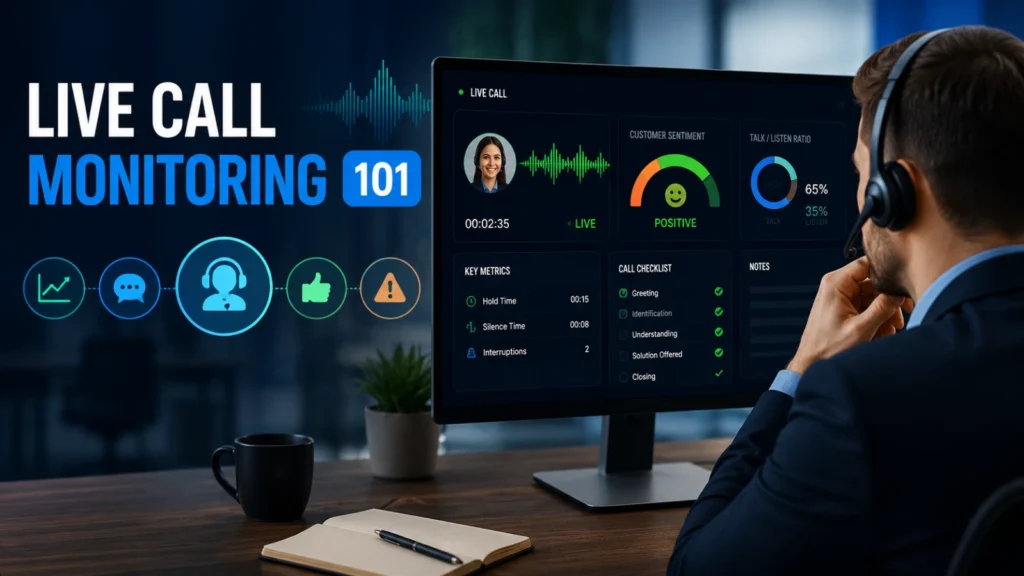
Live call monitoring gets treated as a compliance checkbox in many teams. Turned on, mostly ignored, and reviewed only after something goes wrong. Used properly, it’s one of the best coaching tools a manager has. Here’s what actually deserves attention while listening in.
What Live Call Monitoring Actually Means
Live call monitoring lets a manager listen to a call as it happens. Some systems allow whisper mode, where the manager guides the agent quietly. Others allow full barge-in, joining the call directly when needed. Each mode serves a different purpose depending on the situation.
The Wrong Things Managers Often Focus On
Many managers default to tracking call length or strict script adherence. Neither tells you much about whether the customer actually got helped. A long call might reflect thoroughness, not inefficiency. A short call might mean the agent rushed past a real concern.
Watch the Opening, Not Just the Middle
The first ten seconds of a call set the tone for everything after. Does the agent sound genuinely present, or clearly reading a script? A rushed, flat opening often predicts a weaker call overall. This is one of the fastest signals worth training your ear for.
Listen for Actual Listening
Good agents ask clarifying questions instead of jumping straight to a solution. Watch for whether the agent repeats back what the customer actually said. That habit signals genuine understanding, not just procedural box-checking. Its absence often explains why a resolution didn’t quite land.
Track How Problems Actually Get Resolved
Resolution matters more than politeness alone ever will. Did the agent solve the actual problem, or just address the surface complaint? Watch for premature “is there anything else” questions that end calls too early. A resolved problem should feel resolved to the customer, not just closed.
Pay Attention to Escalation Handling
Not every call should be handled by the original agent alone. Watch how agents recognize when a call genuinely needs escalation. Poor escalation handling often shows up as stalling or vague reassurance. Good escalation handling shows up as clear handoff with full context preserved.
Notice Silence and Dead Air
Long pauses often signal the agent is searching for information manually. Frequent dead air suggests a tooling problem, not just an agent skill gap. This is exactly where integrated systems help. Platforms like VOYCELL surface caller and CRM details automatically during the call.
Use Monitoring for Coaching, Not Punishment
Monitoring used purely for catching mistakes creates a defensive, anxious team. Framed as coaching, it becomes a genuine tool for improvement. Share specific, constructive feedback shortly after the call, while details remain fresh. This turns monitoring into development rather than surveillance.
Setting This Up Without Overcomplicating It
Start by monitoring a small, representative sample of calls each week. Focus feedback on two or three specific behaviors, not everything at once. Built-in monitoring features, like those in VOYCELL, remove the setup friction entirely. The goal is consistent, low-effort visibility, not occasional spot-checks.
The Bottom Line
Live call monitoring is only as useful as what a manager actually watches for. Call length and script compliance rarely tell the full story. Tone, listening, resolution, and escalation handling matter far more. Used consistently and constructively, monitoring becomes a real coaching tool, not just oversight.
Frequently Asked Questions
Should agents know when they’re being monitored?
Most teams disclose that monitoring happens, without flagging every specific call. Transparency about the practice builds trust over time.
Is live call monitoring only useful for new agents?
No. Experienced agents benefit too, especially for refining subtle habits. Monitoring shouldn’t stop once someone passes initial training.
How many calls should a manager monitor each week?
A small, representative sample is usually more useful than monitoring everything. Consistency over time matters more than total volume.
Can monitoring feel invasive to agents?
It can, if used mainly to catch mistakes rather than coach. Framing it around development helps agents see it as support.
What’s the difference between whisper mode and barge-in?
Whisper mode lets a manager guide the agent without the caller hearing. Barge-in joins the call directly, audible to everyone involved.
Does live call monitoring replace call recording review?
No, they serve different purposes. Live monitoring allows real-time coaching; recordings support later review and training.


