
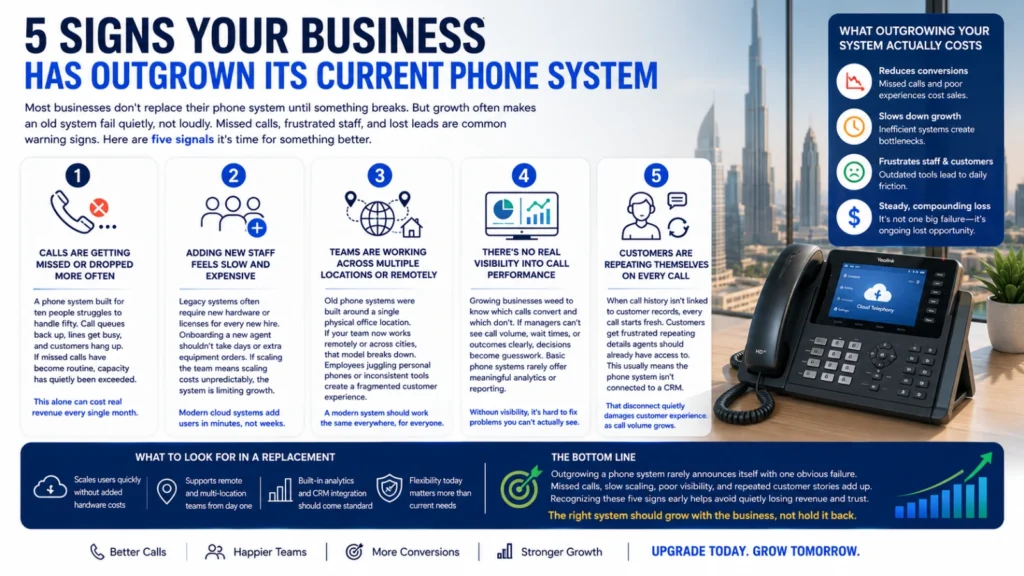
Most businesses don’t replace their phone system until something breaks. But growth often makes an old system fail quietly, not loudly. Missed calls, frustrated staff, and lost leads are common warning signs. Here are five signals it’s time for something better.
1. Calls Are Getting Missed or Dropped More Often
A phone system built for ten people struggles to handle fifty. Call queues back up, lines get busy, and customers hang up. If missed calls have become routine, capacity has quietly been exceeded. This alone can cost real revenue every single month.
2. Adding New Staff Feels Slow and Expensive
Legacy systems often require new hardware or licenses for every new hire. Onboarding a new agent shouldn’t take days or extra equipment orders. If scaling the team means scaling costs unpredictably, the system is limiting growth. Modern cloud systems add users in minutes, not weeks.
3. Teams Are Working Across Multiple Locations or Remotely
Old phone systems were built around a single physical office location. If your team now works remotely or across cities, that model breaks down. Employees juggling personal phones or inconsistent tools create a fragmented customer experience. A modern system should work the same everywhere, for everyone.
4. There’s No Real Visibility Into Call Performance
Growing businesses need to know which calls convert and which don’t. If managers can’t see call volume, wait times, or outcomes clearly, decisions become guesswork. Basic phone systems rarely offer meaningful analytics or reporting. Without visibility, it’s hard to fix problems you can’t actually see.
5. Customers Are Repeating Themselves on Every Call
When call history isn’t linked to customer records, every call starts fresh. Customers get frustrated repeating details agents should already have access to. This usually means the phone system isn’t connected to a CRM. That disconnect quietly damages customer experience as call volume grows.
What Outgrowing Your System Actually Costs
None of these signs seem urgent individually, which is exactly the problem. Together, they quietly reduce conversions, slow growth, and frustrate both staff and customers. The cost isn’t one dramatic failure; it’s steady, compounding inefficiency. Recognizing the pattern early prevents much larger problems later.
What to Look for in a Replacement
A modern system should scale users quickly without added hardware costs. It should support remote and multi-location teams from day one. Built-in analytics and CRM integration should come standard, not as add-ons. Flexibility today matters more than whatever fits current, smaller-scale needs.
The Bottom Line
Outgrowing a phone system rarely announces itself with one obvious failure. Missed calls, slow scaling, poor visibility, and repeated customer stories add up. Recognizing these five signs early helps avoid quietly losing revenue and trust. The right system should grow with the business, not hold it back.
Frequently Asked Questions
How do I know if missed calls are actually a capacity issue?
Track call volume against available lines and staff regularly. Consistent missed calls during busy hours usually signal real capacity limits.
Is switching phone systems disruptive for a growing business?
Modern cloud systems typically migrate with minimal downtime. Most transitions happen faster and more smoothly than businesses expect.
Does a new phone system really need CRM integration?
Yes, for any business handling repeat customers or ongoing sales conversations. It prevents repeated questions and improves overall service quality.
Can remote teams use the same phone system as an office?
Yes, cloud-based systems work identically regardless of employee location. This removes the need for separate remote-specific solutions.
What size business typically outgrows a basic phone system first?
Growth stage matters more than exact company size here. Rising call volume and remote hiring are the clearest triggers.
Is call analytics really necessary for smaller growing teams?
Yes. Even small teams benefit from visibility into call performance. It becomes more valuable as call volume increases further.


