
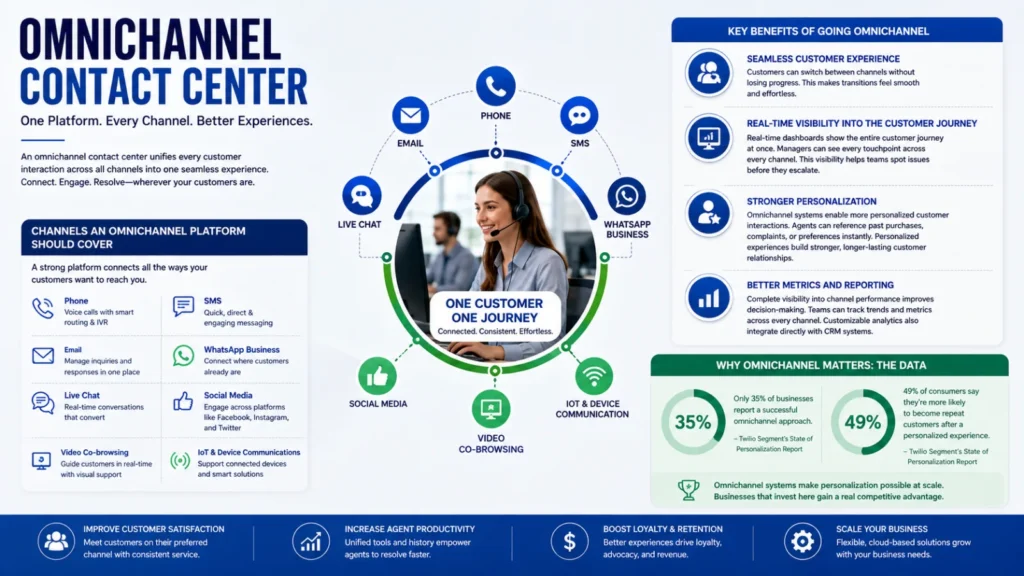
Customers now reach businesses through many different channels. They call, text, email, and message on social media. They expect every interaction to feel connected. An omnichannel contact center makes that possible. This guide explains what it is, why it matters, and how to build one.
What Is an Omnichannel Contact Center?
An omnichannel contact center connects every communication channel together. Phone, SMS, online chat, and email all integrate into one system. Agents work from a single interface throughout every interaction. They never lose context, even as customers switch channels. A customer might start on chat and finish by phone. The agent still sees the full conversation history. This creates a seamless, connected customer experience.
Omnichannel vs. Multichannel: What’s the Difference?
Many people confuse omnichannel with multichannel systems. Multichannel systems let customers reach a company multiple ways. However, each channel operates independently, with no shared data. A chat conversation stays separate from a phone call. This creates frustrating information silos for both customers and agents. Omnichannel systems solve this problem completely. Every touchpoint connects, giving agents complete customer history instantly. Customers never have to repeat themselves across channels.
Key Benefits of Going Omnichannel
Seamless Customer Experience
Customers can switch between channels without losing progress. This makes transitions feel smooth and effortless. It also reduces frustration during long or complex inquiries.
Real-Time Visibility Into the Customer Journey
Real-time dashboards show the entire customer journey at once. Managers can see every touchpoint across every channel. This visibility helps teams spot issues before they escalate.
Stronger Personalization
Omnichannel systems enable more personalized customer interactions. Agents can reference past purchases, complaints, or preferences instantly. Personalized experiences build stronger, longer-lasting customer relationships.
Better Metrics and Reporting
Complete visibility into channel performance improves decision-making. Teams can track trends and metrics across every channel. Customizable analytics also integrate directly with CRM systems.
Channels an Omnichannel Platform Should Cover
A strong omnichannel platform supports many communication channels. This typically includes phone, SMS, and email. It also covers live chat and video co-browsing tools. Social media and WhatsApp Business are increasingly important too. Some platforms even integrate IoT device communications. The more channels supported, the more flexible your customer experience becomes.
Why Omnichannel Matters: The Data
The case for omnichannel is backed by real data. According to Twilio Segment’s State of Personalization Report, only 35% of businesses report a successful omnichannel approach. This means most companies still have real room to improve. The report also found something important about personalization. 49% of consumers say they’re more likely to become repeat customers after a personalized experience. Omnichannel systems make this kind of personalization possible at scale. Businesses that invest here gain a real competitive advantage.
How to Implement an Omnichannel Contact Center
Successful implementation starts with choosing the right technology. Look for a cloud-based solution built for flexibility. Here’s what to prioritize during your search.
- Single unified interface. Agents should manage every channel from one screen.
- Scalability. The platform should support new channels as they emerge.
- Data ownership. Choose a system with centralized dashboards you fully control.
- Strong API support. APIs should connect multiple communication types easily.
- CRM integration. Customer data should sync automatically across your tools.
- Reliable uptime. Downtime directly damages customer trust and satisfaction.
Testing a demo before committing helps confirm real-world performance. Compare a few providers rather than settling on the first option.
Industries That Benefit Most
E-Commerce and Retail
Shoppers often start on chat, then switch to email or phone. Omnichannel systems keep every interaction connected and easy to follow. This reduces cart abandonment and boosts customer confidence.
Financial Services
Clients expect secure, consistent communication across every channel. Omnichannel systems help maintain compliance while improving service quality. Call recording and history support dispute resolution effectively.
Real Estate
Agents juggle calls, texts, and emails from buyers and tenants daily. Omnichannel systems keep every conversation organized and accessible. Nothing falls through the cracks during busy periods.
Customer Support Centers
Support teams handle high volumes across multiple channels simultaneously. Omnichannel systems route inquiries efficiently to the right agent. This reduces wait times and improves first-contact resolution rates.
Common Challenges to Watch For
Adopting omnichannel technology isn’t always simple. Some businesses struggle to fully integrate legacy systems. Others underestimate the training required for agents. Data privacy across multiple channels also needs careful attention. Choosing an experienced provider helps avoid these common pitfalls. A phased rollout often works better than switching everything at once.
Getting Started with Omnichannel
Transitioning to an omnichannel contact center doesn’t have to be overwhelming. Most providers offer guided onboarding and migration support. Start by mapping your current customer communication channels. Then identify where information gaps or delays currently exist. A good provider will help you close those gaps efficiently.
If your business still juggles disconnected communication tools, now is the time to change. VOYCELL can help you build a true omnichannel contact center. Reach out today to see how a connected experience transforms customer service.
Frequently Asked Questions
What is an omnichannel contact center?
It connects phone, chat, email, and other channels into one system. Agents see full customer history no matter how someone contacts you.
How is omnichannel different from multichannel?
Multichannel offers multiple contact options, but channels stay separate. Omnichannel connects everything so agents keep full context throughout.
What channels should an omnichannel platform support?
Common channels include phone, SMS, email, live chat, and social media. Many platforms also support WhatsApp Business and video co-browsing.
Does omnichannel technology integrate with CRM systems?
Yes. Most modern platforms sync customer data directly with popular CRM tools automatically.
Is omnichannel only useful for large enterprises?
No. Growing businesses benefit just as much from connected, consistent communication. Cloud-based platforms make omnichannel accessible for smaller teams too.
How does omnichannel improve personalization?
Agents can see full customer history, including past purchases and preferences. This allows more relevant, personalized conversations in real time.
What are the biggest challenges when adopting omnichannel systems?
Common challenges include legacy system integration and agent training needs. Data privacy across channels also requires careful planning.
How long does it take to implement an omnichannel platform?
Timelines vary based on complexity and existing systems. Many cloud-based providers offer faster, guided implementation processes.
Can omnichannel systems improve customer retention?
Yes. Personalized, connected experiences make customers more likely to return. Consistent service across channels also builds long-term trust.
Is cloud-based omnichannel software secure?
Reputable providers use strong encryption and centralized data controls. Always verify a provider’s security and compliance certifications beforehand.


