
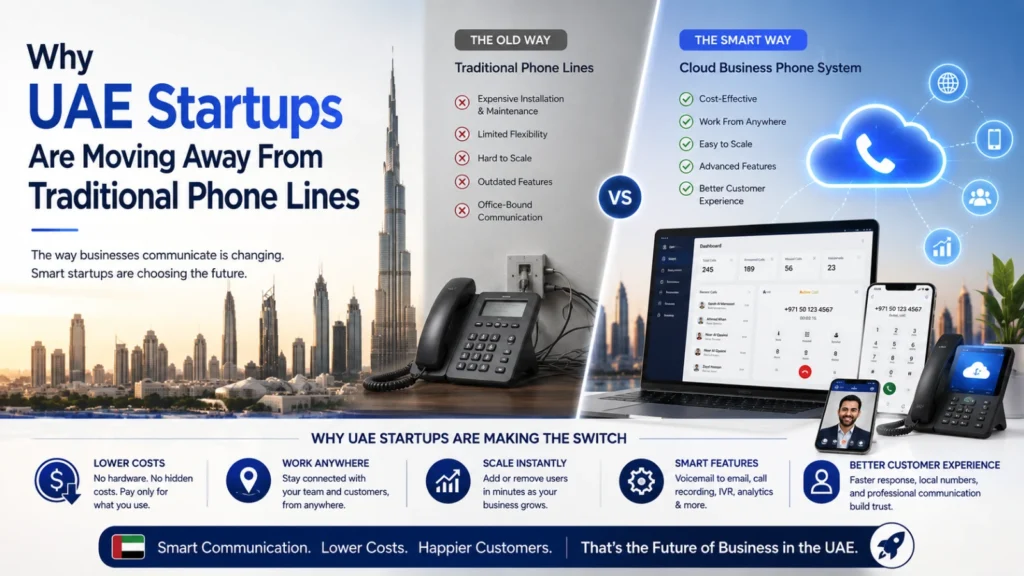
A traditional phone line used to be a basic business requirement. For many UAE startups today, it’s becoming an unnecessary cost and constraint. Cloud-based systems now handle everything a landline once did, and more. Here’s why the shift is happening so quickly.
Startups Don't Want to Pay for Hardware They Don't Need
Traditional phone systems require physical lines, PBX hardware, and on-site installation. That setup demands real upfront capital most early-stage startups would rather avoid. Cloud systems remove that cost entirely, running through existing internet connections instead. This alone makes switching an easy decision for lean, early teams.
Startups Need to Move Fast, Not Wait on Installation
Setting up a traditional phone line often takes days or even weeks. A cloud phone system can typically be active within hours, sometimes minutes. For a startup racing to launch or scale, that speed matters enormously. Waiting on physical installation simply doesn’t fit a startup’s pace.
Remote and Hybrid Teams Don't Fit the Landline Model
Many UAE startups now operate with flexible or fully remote teams. A landline ties communication to one fixed physical location by design. Cloud systems let any team member answer calls from anywhere with internet access. This flexibility has become a basic expectation, not a nice-to-have feature.
Scaling Up or Down Shouldn't Require New Hardware
Startups rarely grow in smooth, predictable, easy-to-plan increments. Traditional systems make scaling painful, often requiring new lines and equipment. Cloud systems let a business add or remove users almost instantly instead. That flexibility matters far more once a startup starts hiring quickly.
Dubai's Multilingual Market Demands Smarter Routing
Startups in the UAE regularly serve customers speaking multiple different languages. Traditional phone lines offer little built-in flexibility for smart, language-based routing. Cloud systems can route calls based on language, region, or specific customer needs. This capability directly supports a smoother, more relevant customer experience.
Integration With Digital Tools Is Now Expected
Modern startups run on CRMs, helpdesk software, and various automation tools. Traditional phone lines simply weren’t designed to connect with any of them. Cloud phone systems integrate directly, syncing call data and customer context automatically. This integration saves real time that startups genuinely cannot afford to waste.
Lower, More Predictable Ongoing Costs
International calling through traditional lines can become unpredictably, sometimes shockingly, expensive. Cloud systems typically offer clearer, more predictable pricing structures for global calling. For startups managing tight budgets, that predictability matters as much as the savings. Unexpected phone bills are a distraction no startup genuinely needs.
Resilience Matters More Than Most Startups Realize
A single physical phone line represents a single point of failure. If it goes down, communication stops entirely until it’s physically repaired. Cloud systems distribute that risk, often rerouting automatically if one path fails. For startups depending on constant customer contact, that resilience matters significantly.
The Bottom Line
Traditional phone lines were built for a slower, more fixed business world. UAE startups now need speed, flexibility, and integration that landlines simply can’t offer. Cost, scalability, and multilingual support all push startups toward cloud-based systems instead. This shift isn’t a trend; it’s simply what modern startups now require.
Frequently Asked Questions
Is switching to a cloud phone system expensive for a new startup?
Generally, no. Cloud systems avoid the upfront hardware costs traditional lines require. Most run on predictable subscription-based pricing instead.
Can a cloud phone system handle international calls affordably?
Yes, typically more affordably and predictably than traditional international calling. Rates and structures are usually clearer upfront.
Do remote teams really need a cloud phone system specifically?
Yes. Traditional lines tie calls to one physical location by design. Remote teams need flexibility landlines simply can’t provide.
How quickly can a startup set up a cloud phone system?
Often within hours, sometimes even less, depending on the provider. This is significantly faster than traditional line installation.
Does switching require replacing existing business phone numbers?
Not necessarily. Most providers support porting existing numbers into the new system. This avoids disrupting existing customer relationships.
Is a cloud phone system reliable enough for daily business use?
Yes, when set up properly with a reputable provider. Many systems include built-in redundancy for added reliability.


